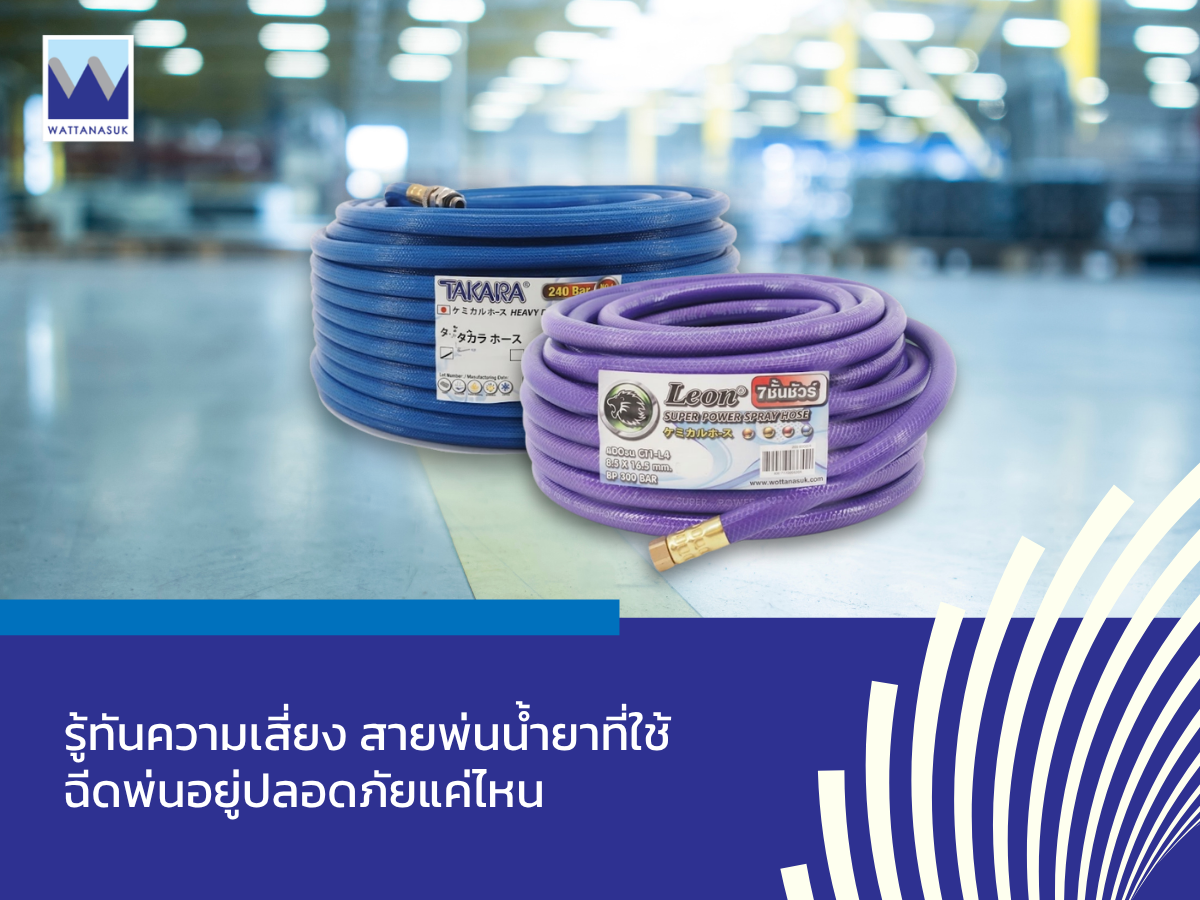
How to Choose a High Pressure Hose: Check WP, BP, and Hose Surface Before Buying
2026-06-22 11:33:35
A high pressure hose should not be chosen only because it is labeled “high pressure.” The right hose depends on the actual application, such as air lines in production, pneumatic tools, construction work, concrete drilling, auto repair shops, or systems that require continuous pressure.
Each application may require a different hose size, material, outer surface, and hose structure. If the hose is not suitable for the job, problems such as swelling, leakage, bursting, or premature deterioration may occur. This is especially important for high-pressure work, outdoor use, or applications where the hose is frequently dragged across rough surfaces.
Before buying, you should check the WP, BP, hose size, inner tube material, outer surface, type of fluid, and the equipment used with the hose.
What Is a High Pressure Hose and What Is It Used For?
A high pressure hose, or industrial rubber air hose, is designed to handle air, water, or certain fluids better than a general hose. It usually has a multi-layer structure, including an inner tube that comes into contact with air or fluid, a reinforcement layer that helps handle pressure, and an outer layer that protects the hose from friction during use.
High pressure hoses are commonly used for air supply in factories, pneumatic tools, welding work, construction, concrete drilling, auto repair shops, and maintenance work that requires a hose stronger than a general-purpose hose.
If the application involves oil, gas, chemicals, or specific fluids, you should choose a hose that is clearly specified for that fluid. A general air hose should not be used as a replacement without checking the specification first.
What Are WP and BP, and Why Should You Check Them Before Buying?
WP, or Working Pressure, is the maximum pressure the hose can support during normal operation. BP, or Burst Pressure, is the pressure level the hose can withstand before bursting.
In general, BP is higher than WP because it acts as a safety reference. However, when choosing a hose, WP should be the main value to check because it tells you whether the hose is suitable for the actual working pressure of the system.
For example, if an air system operates at around 15 bar, the hose should have a WP that properly supports that working pressure. You should not look only at the BP and assume the hose can safely operate at that level every day. BP is the pressure before failure, not the recommended pressure for continuous use.
If the system has pressure surges, long operating hours, or is used in a higher-risk environment, it is better to allow a safety margin and ask the sales team to confirm the correct hose specification before buying.
Ribbed Hose vs Smooth Hose: What Is the Difference?
Ribbed rubber air hoses and smooth rubber air hoses differ mainly in their outer surface. This affects actual use, especially when the hose is dragged on the floor or used outdoors.
A ribbed rubber air hose is suitable for work where the hose is frequently dragged across concrete floors, rough surfaces, construction sites, drilling areas, or maintenance areas. In many working conditions, the ribbed surface helps handle abrasion from dragging better than a smooth surface.
A smooth hose is more suitable for production lines, factory work, or areas where the hose position is relatively fixed and it is not dragged heavily all the time. Its main advantage is that it is easier to clean and maintain, making it suitable for areas that need a neat and organized setup.
In simple terms, if the hose will be dragged often or used on rough surfaces, consider a ribbed hose first. If it will be used in a factory area with a clear hose position, a smooth hose may be enough in many cases.
What Should You Check in the Hose Structure and Inner Tube Material?
The hose structure helps indicate whether a hose is designed for light-duty use, general use, or higher-pressure applications. However, the number of layers alone should not be the only factor. The right hose should be selected by checking WP, material, hose size, outer surface, and the actual application together.
For industrial rubber air hoses, materials such as SBR are commonly used for general air and water applications. Some hoses may contain materials or structures designed to handle oil or certain fluids better, but this must be confirmed from the specification of each model.
This is especially important for applications involving oil, gas, or chemicals, because not every air hose can handle every type of fluid.
Choose a High Pressure Hose Based on the Real Application
The best way to choose a hose is to start with the actual job, not simply the hose with the highest pressure rating.
For general air work in factories or production lines, you may choose an industrial rubber air hose with a suitable WP and the correct size for the existing fittings. If the area is clean or easy maintenance is important, a smooth hose may be more convenient.
For construction work, drilling, maintenance, or areas where the hose is often dragged across rough floors, a ribbed rubber air hose is usually more suitable because it can better handle surface abrasion.
For systems with continuous high pressure or pneumatic tools that require more power, you should consider a High Pressure Air Hose or a hose that is clearly specified for the pressure level of that system.
What Should You Check Before Buying a High Pressure Hose?
Before buying a high pressure hose, you should check the actual worksite details first. This includes the application, system pressure, space limitations, and connected equipment. This is especially important for industrial applications that use continuous pressure or require frequent hose movement.
If the wrong hose is selected from the beginning, it may deteriorate quickly or cause problems during use, even if it looks strong from the outside.
Key details to check before buying include:
| What to Check | Why It Matters |
|---|---|
| Hose size or inner diameter, such as 1/4", 1/2", 3/4", or 1" | Must match the required flow and fittings |
| WP value | Must be suitable for the system’s working pressure |
| BP value | Used as additional safety information |
| Medium passing through the hose | Air, water, gas, oil, or specific fluids may require different hose materials |
| Hose surface | Ribbed or smooth surface should match the worksite |
| Work area | Factory, outdoor area, rough floor, or clean area |
| Hose length | Should match the actual distance of use |
| Connected equipment | Air compressor, pneumatic tools, fittings, or couplings must be compatible |
If the system operates at high pressure, do not choose a hose with a WP too close to the actual system pressure without any safety margin. Ask the sales team or a specialist to help confirm the correct specification, especially if the job involves pressure surges, heat, frequent dragging, or harsh environments that may shorten hose life.
Why Do Rubber Air Hoses Swell, Burst, or Leak?
Rubber air hose problems such as swelling, bursting, or leaking often happen when the hose is not suitable for the job or is used beyond its specification. Common causes include using pressure higher than the WP, leaving pressure inside the hose for too long without releasing it, dragging the hose across rough surfaces without protection, folding or twisting the hose sharply, or using fittings that do not match the hose size.
If you notice swelling, cracks on the hose surface, or air leakage, stop using the hose and inspect it first. Do not continue using it, because a pressurized hose may burst suddenly and become dangerous to the user or nearby equipment.
Choosing a High Pressure Hose from Wattanasuk
Wattanasuk offers several groups of rubber air hoses and industrial hoses, including ribbed rubber air hoses, smooth rubber air hoses, high pressure rubber air hoses, and multi-purpose hoses for different types of work.
The right choice should be based on pressure, worksite conditions, material, and the type of fluid used with the hose.
| Model Group | Product Type | Suitable For |
|---|---|---|
| AAB001–007 | Bridgestone Compressed Air Hose | General air work, factory work, or applications that need a ribbed hose |
| AAT201–214 | TAKARA Compressed Air Hose | Production lines, factory work, or areas that need a smooth hose that is easy to clean |
| AAT601–603 | TAKARA High Pressure Air Hose | Pneumatic tools, auto repair shops, high-pressure air work, or jobs that need better abrasion resistance |
| AATB402–407 | TAKARA Multi-Purpose Hose | Applications that may involve air, water, oil, or different fluids according to each model’s specification |
| CAYT02 | TAKARA PVC Jack Hammer Hose | Construction work, concrete drilling, or heavy pneumatic tool applications |
Note: WP, BP, material, and hose structure may vary by model and size. Before ordering, check the specification of the required model from the product page or contact Wattanasuk to confirm suitability for the actual pressure and work conditions.
What Information Should You Provide Before Ordering or Requesting a Quote?
Providing complete worksite information from the beginning helps the sales team recommend the right hose more accurately than simply saying, “I need a high pressure hose.” The term is still very broad and may refer to air hoses, water hoses, pneumatic tool hoses, construction hoses, or multi-purpose hoses.
Useful information to provide includes hose size or inner diameter, required length, application, medium passing through the hose, system pressure, work area, quantity, and connected equipment such as an air compressor, pneumatic tools, fittings, or existing couplings.
For example, a clear request would be: “I need a 1/2-inch ribbed rubber air hose for pneumatic tools in a factory. The system operates at around 15 bar. Required length is 40 meters, quantity 5 rolls.”
This kind of information helps the sales team choose the right hose group and size faster.
FAQ About High Pressure Hoses
What is the difference between WP and BP? Which one should I check first?
WP is the maximum working pressure for normal operation, while BP is the pressure the hose can withstand before bursting. When choosing a hose, check WP first to make sure it matches the actual system pressure. BP should be used as additional safety information.
When should I choose a ribbed hose or a smooth hose?
A ribbed hose is suitable for work where the hose is dragged across rough floors, used outdoors, or used in construction areas. A smooth hose is suitable for factories, production lines, or areas where the hose has a clear placement and needs easy cleaning.
Can a high pressure hose be used with an air compressor?
Yes, if the hose has a suitable WP, hose size, and fittings for the air compressor and pneumatic tools being used. The specification should be checked before actual use, especially for high-pressure or continuous-use systems.
What is a ribbed rubber air hose suitable for?
A ribbed rubber air hose is suitable for jobs where the hose is frequently dragged or used on rough surfaces, such as construction work, maintenance work, pneumatic tool applications, or areas where the hose is exposed to more floor abrasion than typical production-line use.
What is the difference between SBR and SBR+NBR?
SBR is commonly used for general air and water applications. SBR+NBR offers better resistance to oil or certain fluids. However, the specification of each model should always be checked before use because not every hose supports the same types of fluids.
What should I do if I do not know the system pressure?
Do not choose a hose by product name alone. Check the pressure from the air compressor, machine, or system first. Then provide the pressure, hose size, length, and worksite details to the sales team so they can recommend a suitable model.
Why Does a Garden Hose Keep Kinking During Use?
Why Does a PU Air Hose Leak or Come Loose at the Fitting?
What Type of Water Delivery Hose Should You Use for Pumping Water Across Rice Field Bunds or Connecting to a Dragon Pump Pipe?